
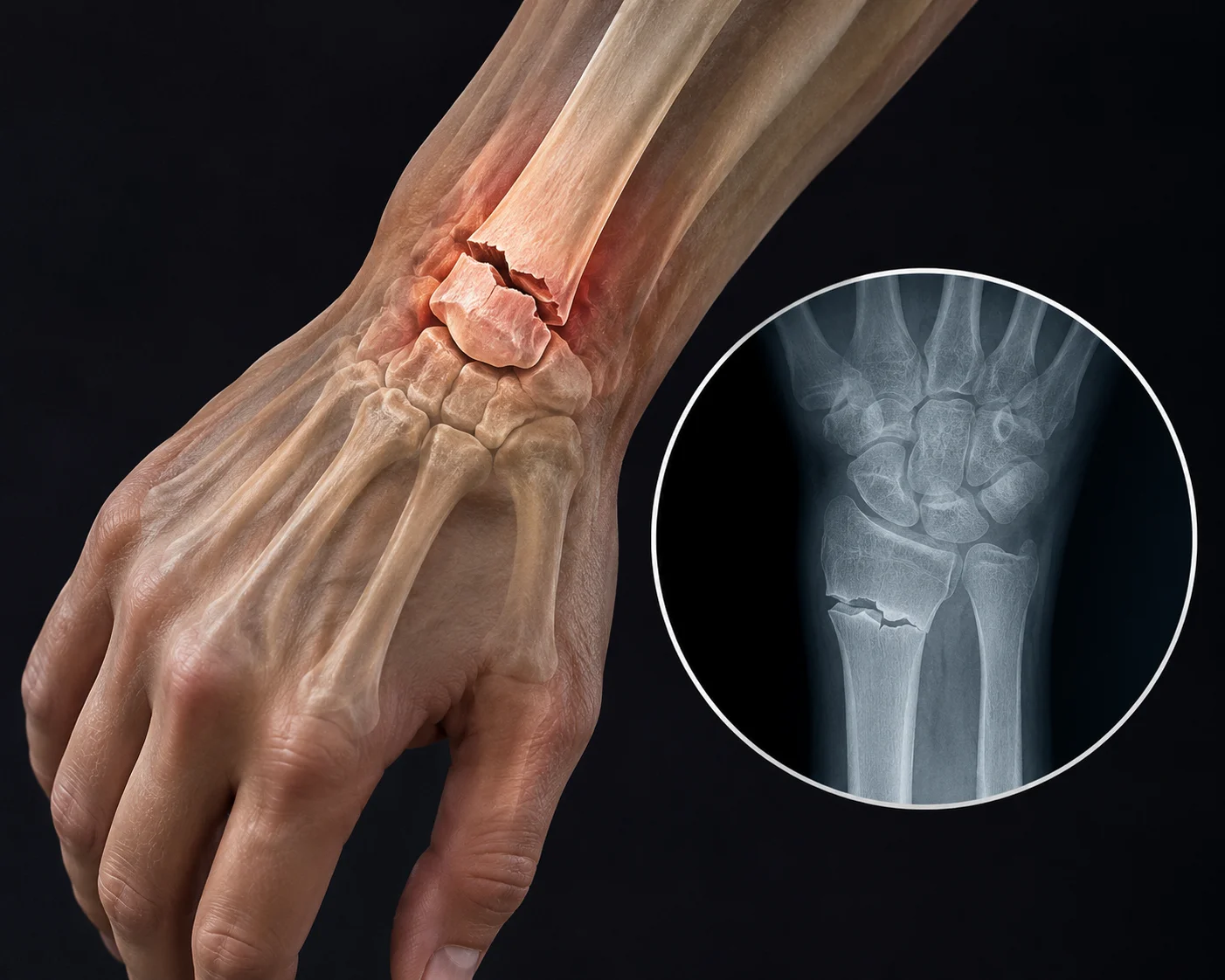
What is a fracture?
A fracture is a break in a bone, or a loss of continuity of the bone. It happens when the force applied to the bone is stronger than what the bone can withstand. Fractures can range from a very small crack, known as a hairline fracture, to a complete break where the bone separates into two or more parts.
Quite common things nowadays are fractures in children and teenagers. Since children are active and frequently involved in sports, play, and outdoor activities, falls and minor accidents can easily lead to injuries. The reassuring part is that children’s bones heal faster and more efficiently than adult bones. With proper diagnosis and timely treatment, most children recover completely and return to their normal activities without long-term problems.
Why are children’s bones different?
Children’s bones are different from adult bones because they are still growing and are more flexible. They contain special areas called growth plates, which are responsible for bone lengthening. These areas are softer than the rest of the bone, making them more prone to injury.
In addition, children’s bones are softer and more elastic. The outer covering of the bone, called the periosteum, is thicker and stronger in children. This helps keep fractures more stable and also promotes faster healing.
Because of these unique features, children can develop fracture patterns that are not seen in adults. Another important advantage is that children’s bones have the ability to remodel, meaning they can correct minor deformities over time as the child grows.
At Dr. Bansal’s Arogya Hospital, we understand that fracture treatment depends on multiple factors such as the type of fracture, the child’s age, and the amount of growth remaining. Treatment is always individualised to ensure the best possible outcome.
What are the different types of fracture patterns in children and teenagers?
Children can have several types of fractures that are specific to their growing bones. These include:
- Growth plate injuries
- Hairline fractures
- Torus (buckle) fractures
- Greenstick fractures
- Plastic deformation
- Complete fractures
Each of these has different features and treatment approaches.
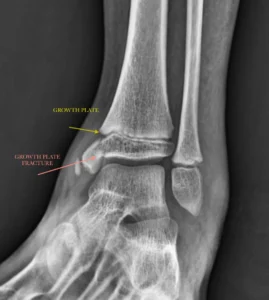
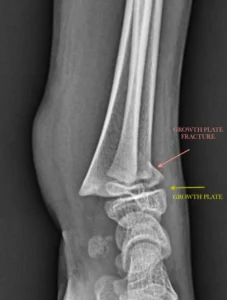
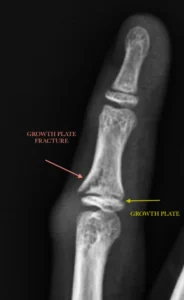
Growth Plate Injuries
Growth plates are areas of developing cartilage located near the ends of bones. These are the regions where bone growth occurs. Since they are softer and weaker than the surrounding bone, they are more vulnerable to injury, especially during falls, sports, or accidents.
A fracture involving this area is called a growth plate injury.
These injuries occur only in children and adolescents whose bones are still growing. If not treated properly, they can affect future bone growth. However, with early diagnosis and correct treatment, most children heal well and continue to grow normally.
Treatment depends on several factors such as the child’s age, the location of the injury, the degree of displacement, and the amount of growth remaining. Because of the risk of growth disturbance, any suspected growth plate injury should always be evaluated by a doctor.
Hairline Fractures
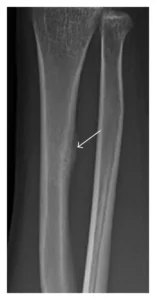
A hairline fracture is a very small crack in the bone. The bone is not completely broken, but there is a thin fracture line present.
These fractures commonly occur due to repeated stress on the bone, especially in children involved in sports, running, or jumping activities. They can also occur after minor trauma.
Children with hairline fractures may complain of:
- Localised pain that increases with activity
- Mild swelling
- Tenderness over a specific area
These fractures are sometimes difficult to detect early and may require careful examination. Treatment usually involves rest, activity modification, and sometimes immobilisation with a splint or cast to allow proper healing.
Torus (Buckle) Fracture
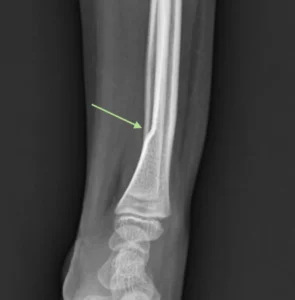
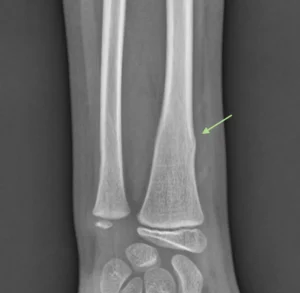
A torus fracture, also called a buckle fracture, occurs when the bone compresses and causes a bulging or buckling of one side of the bone cortex, instead of breaking completely.
This type of fracture is very common in children because their bones are softer and more flexible.
It usually occurs in the wrist (distal radius) and is commonly caused by a fall on an outstretched hand. The bone remains intact without a complete break, making this a stable injury.
Torus fractures heal very well and are typically treated with short-term splinting or casting. Recovery is usually quick, and complications are rare.
 ‘
‘
Greenstick Fracture
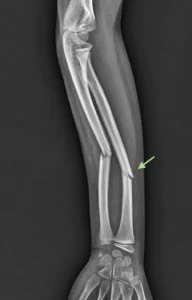
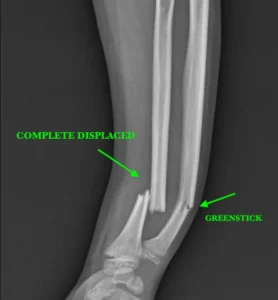
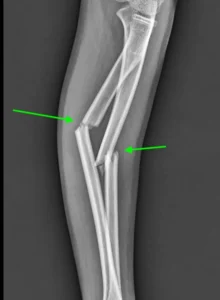
A greenstick fracture occurs when the bone bends and breaks on one side, while the other side remains intact. It is similar to how a fresh green branch behaves when bent—it cracks on one side but does not break completely.
This type of fracture is commonly seen in the forearm bones (radius and ulna).
In a greenstick fracture:
- One side of the bone breaks
- The other side bends but remains intact
Treatment usually involves gently realigning the bone so that it heals in the correct position. This procedure can be painful, so it is often done under sedation or anaesthesia to keep the child comfortable. After alignment, a cast is applied to maintain the position during healing.
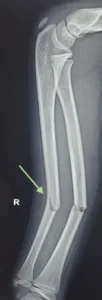
Plastic Deformation
In some cases, children’s bones do not break at all but instead bend and remain deformed. This is called plastic deformation.
It usually occurs after a fall. The child may initially have pain, followed by a visible deformity. Interestingly, the deformity may not always be painful after some time, which can lead to delayed diagnosis. Movement of the affected limb may be reduced or uncomfortable.
Because there is no clear fracture line, plastic deformation can sometimes be missed on initial evaluation.
Treatment depends on:
- The child’s age
- The degree of bending
- The bone involved
Mild deformities, usually less than 10 degrees, often correct themselves over time, especially in younger children. However, more significant deformities may require correction. Straightening the bone can be painful, so it is typically done under sedation or anaesthesia to ensure the child remains comfortable.
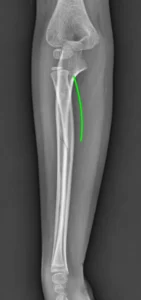
Complete Fracture
A complete fracture occurs when the bone breaks through its entire thickness and separates into two or more pieces. These fractures usually result from a significant fall or injury.
Complete fractures are broadly classified into two types:
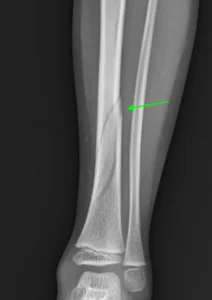
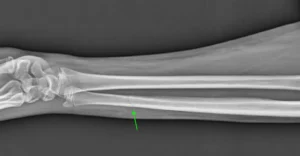
Undisplaced Fractures
In undisplaced fractures, the bone is completely broken, but the alignment remains normal. The bone ends are still in their correct position.
These fractures are usually stable and are treated with immobilisation using a slab or cast. Depending on the child’s age, pain level, and the need for minor correction, anaesthesia may or may not be required during casting.
Healing is generally smooth, with excellent outcomes.
Displaced Fractures
In displaced fractures, the broken bone ends are not aligned properly. The fragments may shift, rotate, or angulate, leading to visible deformity, pain, and restricted movement.
These fractures usually require reduction, which means realigning the bone to its normal position. This can be done:
- As a closed procedure (without surgery), or
- As an open procedure (with surgery), if needed
Once the bone is aligned, it must be stabilised to maintain the position during healing. Stabilisation may involve a cast or surgical implants such as wires, nails, or plates, depending on the fracture type and stability.
Diagnosing a Fracture
Diagnosis of a fracture usually involves X-rays.
At Dr. Bansal’s Arogya Hospital, we use digital X-rays and a PACS system, which allows doctors to view images immediately after they are taken. This enables quick and accurate diagnosis.
Dr. Ankita Bansal and Dr. Vijay Bansal are experienced orthopaedic surgeons who can interpret X-rays independently without waiting for a radiology report. In some cases, X-rays of the normal side may also be taken in children to better understand growth plates and normal variations. This helps in making an early and accurate diagnosis.
X-rays are often repeated after about one week. This is because some hairline fractures or very subtle fractures may not be clearly visible on the first X-ray, but become more obvious on repeat imaging as the healing process begins.
Treatment for a Fracture
The initial treatment for most fractures involves immobilisation using a posterior splint (plaster slab). This helps reduce pain, control swelling, and maintain proper alignment of the bone.
Further treatment depends on several factors, including:
- Type of fracture
- Location of the fracture
- Age of the child
- Growth remaining
- Functional requirements
At Dr. Bansal’s Arogya Hospital treatment is always customised for each child to ensure safe healing, proper bone alignment, and the best functional outcome.