What Are Growing Pains?
Growing pains are one of the most common causes of leg pain in children. They usually cause aching or throbbing pain in both legs, especially in the evening or at night. By morning, the pain is often completely gone, and the child continues to run, play, and participate in normal activities.
Because these pains typically occur at night and are not linked to an underlying disease, doctors may also refer to them as Idiopathic Nocturnal Pains of Childhood or Benign Nocturnal Limb Pains of Childhood.
Despite the name, growing pains are not directly caused by growth. Most children gradually outgrow them with time.
What Causes Growing Pains?
The exact cause is not fully understood. Research suggests that several factors may play a role, including:
- Increased physical activity during the day
- Muscle fatigue
- Vitamin D deficiency in some children
- Individual pain sensitivity
There is no single proven cause of growing pains.
What Are the Typical Symptoms of Growing Pains?
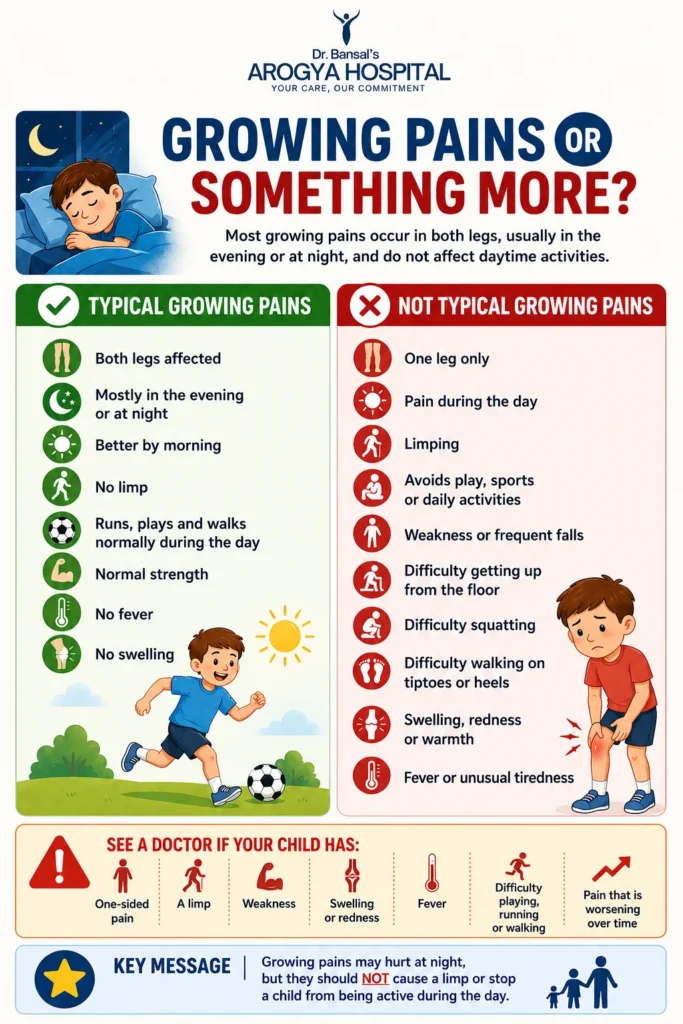
Growing pains usually have the following features:
✅ Pain in both legs
✅ Pain in the calves, thighs, shins, or behind the knees
✅ Pain occurs in the evening or at night
✅ Pain improves with rest, massage, or simple pain relief
✅ Child is active and playful during the day
✅ No limp or movement restriction
Are Growing Pains Dangerous?
No. Typical growing pains are harmless and usually improve with time. Most children continue to walk, run, and play normally despite occasional episodes of pain.
When Should You Worry About Leg Pain?
The following symptoms are not typical of growing pains and should be evaluated by a doctor:
❌ Pain in only one leg
❌ Pain limited to a specific joint
❌ Persistent pain during the day
❌ Limping or difficulty walking
❌ Swelling, redness, warmth, or rash
❌ Fever
❌ Weakness or easy fatigue
❌ Difficulty running, playing, or climbing stairs
❌ Restricted movement of a joint
How Can Parents Help at Home?
Many children feel better with:
- Gentle massage
- Warm compresses
- Stretching exercises
- Adequate hydration
- Occasional pain-relief medication as advised by a doctor
What Happens During a Doctor’s Visit?
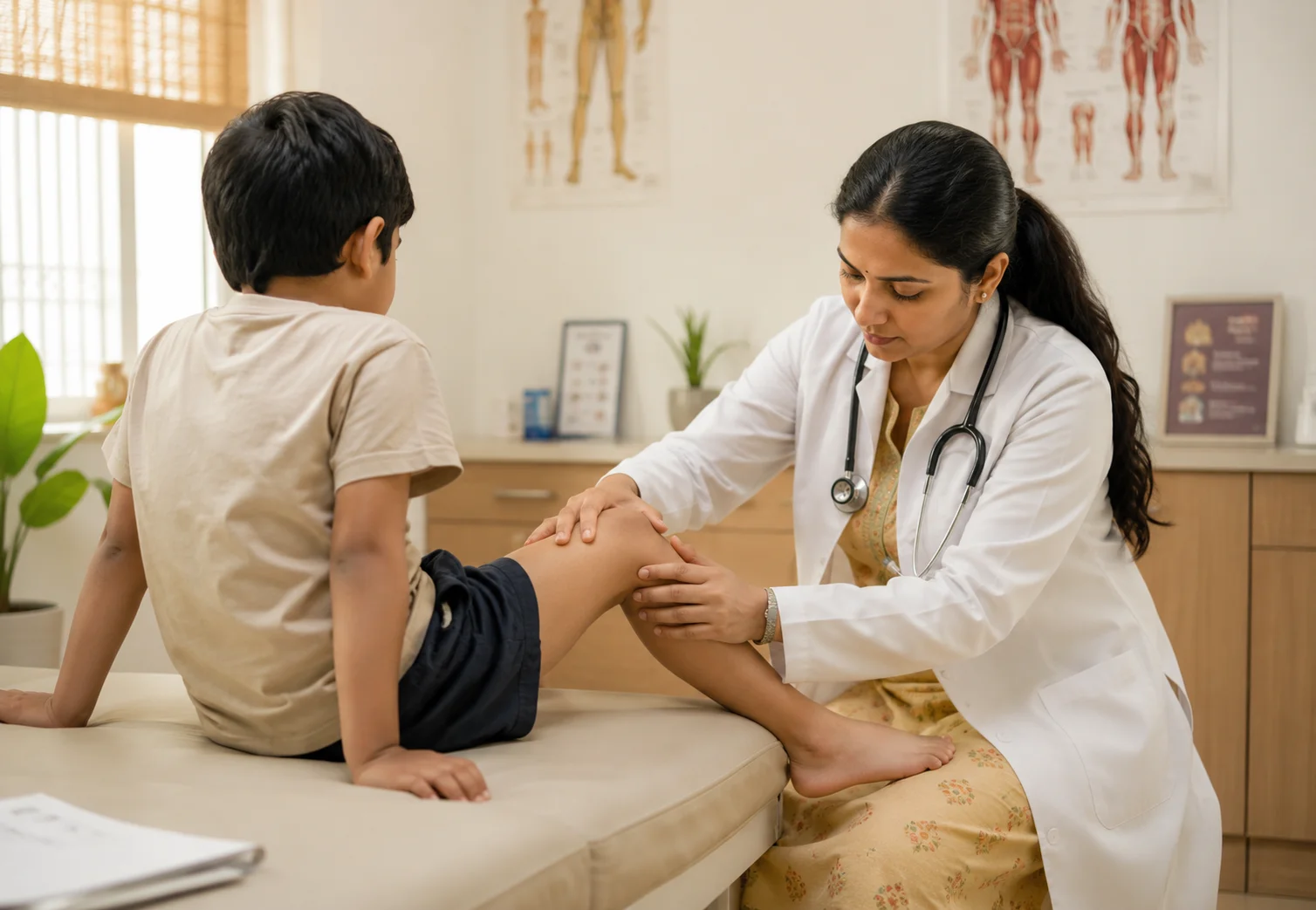
Your doctor will perform a detailed examination to ensure the pain is not coming from the bones, joints, muscles, or nerves.
Depending on the symptoms, investigations may include:
- X-rays
- Blood tests
- Vitamin D and bone health assessment
Most children with typical growing pains do not require extensive testing.
Key Takeaway
Growing pains are common, harmless, and usually occur in both legs at night while the child remains active during the day. If the pain is one-sided, associated with a limp, swelling, fever, weakness, or affects daily activities, a medical evaluation is recommended.
Disclaimer: This article is intended for general educational purposes only and should not be considered medical advice. For diagnosis, treatment, or advice specific to your condition, please consult a qualified healthcare professional.