
Understanding Spine Disc Problems, Sciatica & Modern Treatment Options
Back pain and neck pain are among the most common reasons patients visit a doctor in Mumbai and Thane today. A large number of them come with MRI reports mentioning terms like “L4-L5 slipped disc,” “disc bulge,” or say things like “Kambaret gap zhala aahe” or “I have cervical spondylitis.” These terms often create unnecessary fear and confusion.
A slipped disc, medically known as a disc herniation, is a very common condition and, importantly, in most cases it is treatable without surgery. However, understanding what it actually means helps patients make informed and timely decisions, especially in a fast-paced urban lifestyle like Mumbai where prolonged sitting, travel, and work stress play a major role.
What Exactly Is a Slipped Disc?
The spine is a highly engineered structure made up of bones (vertebrae) stacked one over another, forming a protective canal through which the spinal cord and nerves travel from the brain to the rest of the body. Between each pair of bones lies a soft cushion called the intervertebral disc. This disc acts as a shock absorber and allows flexibility, helping us bend, twist, and move comfortably.
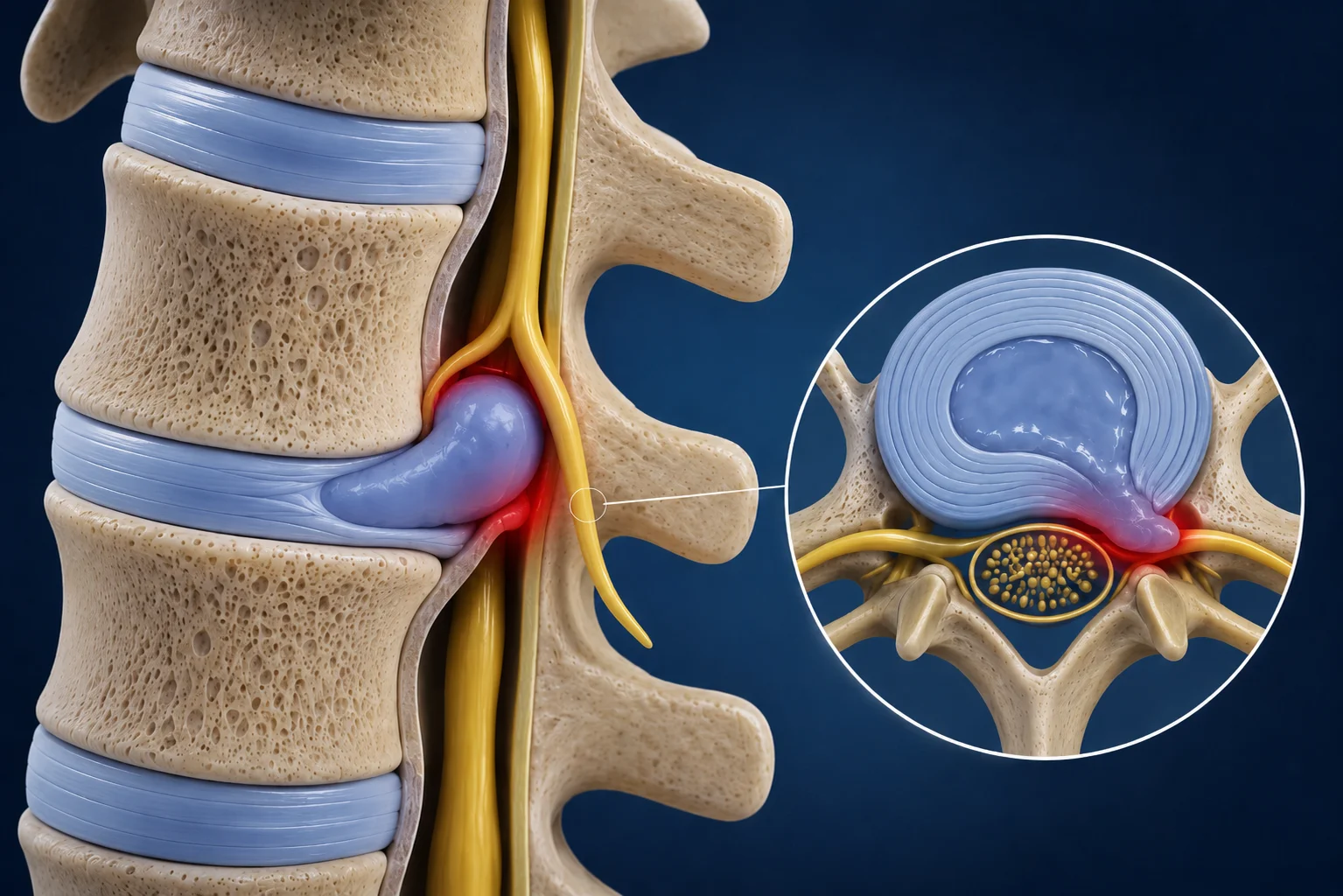
Each disc has a tough outer covering known as the annulus fibrosus and a soft, gel-like center called the nucleus pulposus. In a healthy young individual, this gel remains soft and elastic, allowing smooth movements and absorbing daily stress.
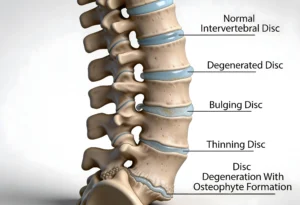
However, after the age of 25, gradual wear and tear begins. This is a natural process, but factors such as prolonged sitting, poor posture, lack of core strength, and smoking tend to accelerate this degeneration. In cities like Mumbai and Thane, the long commuting hours in hot and humid weather, with prolonged sitting or standing in a single position without hydration significantly increase disc degeneration and joint injury. Over time, the gel starts losing water content and becomes harder, while small cracks can develop in the outer fibrous ring.
When this weakened outer layer allows the inner gel to push outward, it results in what we call a slipped disc or disc herniation.
Why Does It Cause So Much Pain?
One of the most important concepts patients should understand is that the inner gel itself does not feel pain, but the outer covering does. When there is a tear in this outer layer, it causes localized back or neck pain.
Patients often describe this sensation very accurately — it feels like a thorn stuck inside the back
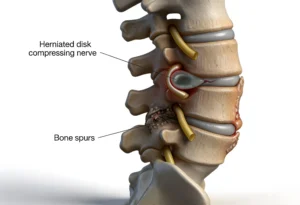
or neck, constantly irritating the area with movement. This analogy helps explain why even small movements can trigger sharp pain.
When the disc material extends beyond its normal boundary and enters the spinal canal, the body identifies it as something abnormal and mounts an inflammatory response. This leads to swelling around the nerves, which is why patients experience severe shooting pain, burning sensation, tingling, or numbness.
So, the pain is not just due to pressure on the nerve, but also due to chemical irritation caused by inflammation.
Why Does Pain Travel to the Leg or Arm?
In many patients, the biggest concern is not back pain, but leg pain or arm pain. This happens because the herniated disc presses on specific nerves that travel to the limbs.
In the lower back, this leads to sciatica, where pain travels from the back into the buttock and down the leg, sometimes reaching the foot. Patients may also notice tingling on the dorsum or sole of the foot, numbness, or weakness while walking.
In the neck, a slipped disc can cause pain radiating into the shoulder, arm, and hand, sometimes associated with reduced grip strength or clumsiness.
In more severe cases, especially when the spinal cord is involved, patients may develop imbalance while walking or weakness in both hands or legs. Very large disc prolapses can even affect bladder and bowel control, which is a serious warning sign requiring urgent medical attention.
What Is the “Gap” That Patients Are Told About?
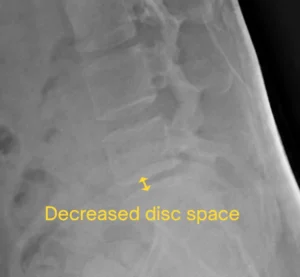
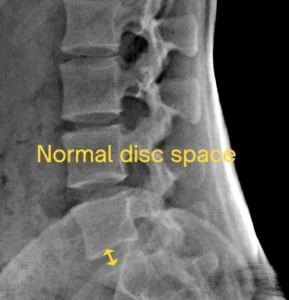
A very common term used locally is “gap in the spine.” This comes from X-ray findings. Since discs are not visible on X-rays, doctors assess the space between bones. When this space appears reduced, it indicates disc degeneration.
This finding by itself is not dangerous and does not mean that surgery is required. It is simply a sign of age-related or lifestyle-related changes in the spine.
Can a Slipped Disc Heal Without Surgery?
This is one of the most important questions, and the answer is reassuring.
The majority of patients, nearly 80 to 90 percent, improve without surgery. The body has a natural ability to gradually absorb the herniated disc material over time, which can take a few months depending on the severity.
In a city like Mumbai, where many patients have sedentary jobs, the key to recovery lies not in prolonged bed rest but in controlled activity and guided rehabilitation. Avoiding long hours of continuous sitting, taking breaks every 30 to 45 minutes, improving posture, and strengthening core muscles play a critical role in recovery.
Physiotherapy, when done correctly, helps reduce inflammation, improve flexibility, and prevent recurrence.
When Should You Consider Surgery?
While most patients recover without surgery, certain situations require timely surgical intervention to prevent permanent nerve damage.
Surgery becomes necessary when there is progressive weakness, severe pain that does not improve despite adequate conservative treatment, or significant functional impairment due to numbness. Loss of bladder or bowel control is a medical emergency and requires immediate treatment.
The decision is always based on a combination of clinical symptoms and MRI findings, not imaging alone.
Advanced Minimally Invasive Treatment in Mumbai & Thane
When surgery is required, modern spine surgery has evolved significantly. At Dr. Bansals Arogya Hospital, the focus is on minimally invasive techniques such as endoscopic discectomy. Uniportal endoscopic discectomy is an ultra minimally invasive form of spine surgery which requires very specialised equipment and instruments to provide the clearest view of the spine and the nerves inside.
This technique allows precise removal of the herniated disc fragment through a very single small incision, preserving surrounding muscles and structures. As a result, patients experience less pain after surgery, faster mobilization, and quicker return to daily life.
Most patients are able to walk within 24 hours after the procedure and resume routine activities, including work, within about 10 days, depending on individual recovery.
Living with Spine Health in Mumbai’s Lifestyle
Urban lifestyle plays a significant role in spine problems. Long commutes, desk jobs, and reduced physical activity contribute heavily to early disc degeneration. Small changes such as maintaining proper posture, using ergonomic seating, staying physically active, and avoiding smoking can significantly reduce the risk of recurrent disc problems.
Understanding your condition correctly is the first step toward recovery. A slipped disc is not a life sentence, and with the right guidance, most patients can return to a normal, active life.
When Should You Consult a Spine Specialist in Thane or Mumbai?
If you are experiencing persistent back pain, radiating leg or arm pain, tingling, numbness, or weakness, it is advisable to seek early consultation. Delaying evaluation, especially in the presence of nerve symptoms, can prolong recovery or lead to complications.
At Dr. Bansals Arogya Hospital, the approach focuses on accurate diagnosis, prioritizing non-surgical treatment wherever possible, and offering advanced minimally invasive surgery only when clearly indicated.
Final Perspective
A slipped disc is one of the most common spine conditions seen in metropolitan cities like Mumbai and Thane, but it is also one of the most misunderstood. Fear often comes from lack of clarity. Once patients understand the condition, its natural course, and the treatment options available, decision-making becomes much more confident and rational.
With timely care, proper rehabilitation, and when needed, modern minimally invasive surgery, the outcomes are highly favorable.