
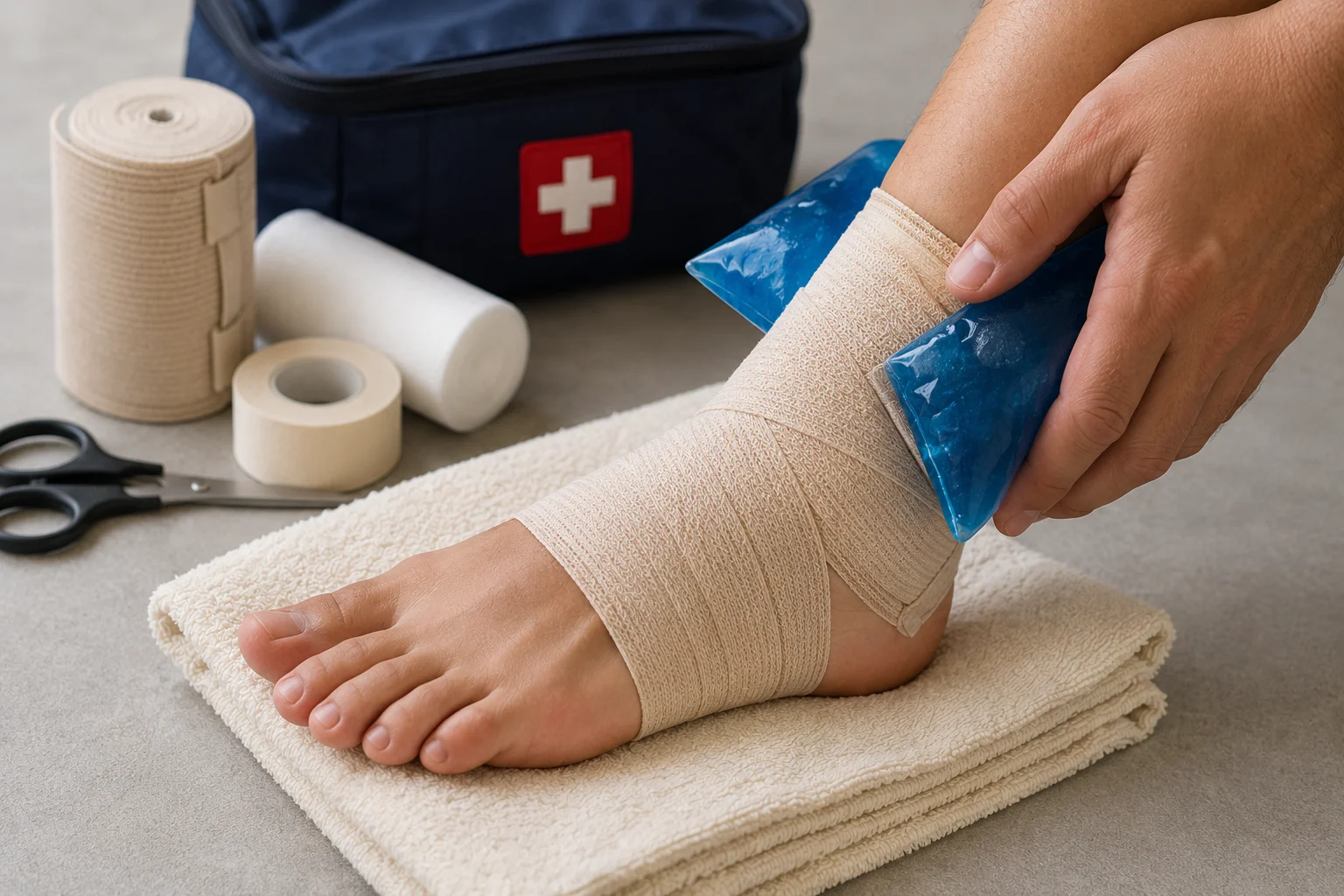
A simple, step-by-step guide to help you take the right steps in the first hours after a bone or joint injury — before you see a doctor.
How injuries happen
Orthopaedic injuries can occur in many everyday situations — a slip or fall, a direct blow (such as a ball hitting your hand or wrist), a sudden twist of the knee or ankle, or even landing awkwardly. Knowing what to do immediately can reduce pain, prevent further damage, and speed up recovery.
✔ What to do — first aid steps
1. Rest the injured part
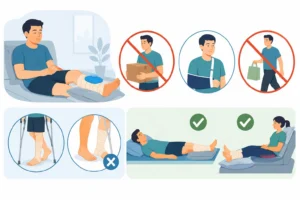
Stop using the injured area immediately. For upper limb injuries (hand, wrist, forearm, elbow, arm, or shoulder) — use a sling or arm pouch, and avoid lifting or carrying anything. For lower limb injuries (hip, thigh, knee, leg, ankle, or foot) — do not put any weight on the leg. Sit or lie down and keep it still.
2. Elevate the limb
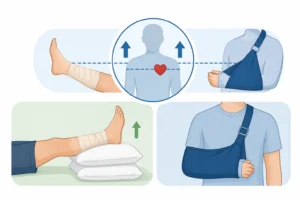
Raising the injured limb above the level of your heart reduces swelling. For leg injuries, prop the leg up on two pillows while lying down. For arm injuries, a sling naturally elevates the limb — keep it snug and comfortable.
3. Apply ice packs
Cold helps reduce pain and swelling in the first 24–48 hours. Apply an ice pack or a bag of frozen peas to the injured area for 15–20 minutes at a time. Always place a thin cloth or towel between the ice and your skin — applying ice directly can cause blisters and cold burns.
4. Compression
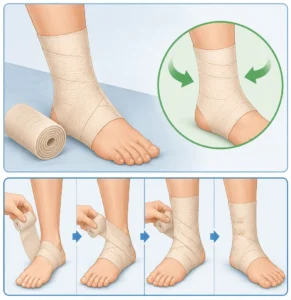
A lightly wrapped crepe bandage can provide gentle support and help control swelling. Wrap it snugly but not tightly — if your fingers or toes feel numb, tingly, or turn blue, the bandage is too tight. Loosen it immediately.
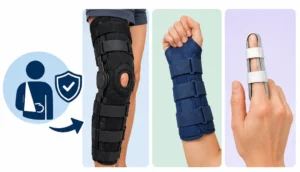
5. Use a splint if needed
Commercially available splints — such as a knee brace, forearm splint, or finger splint — can be applied for temporary support and pain relief. These are not a substitute for medical treatment; use them only until you can see a doctor.
✖ What not to do
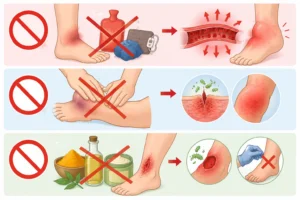
Do not apply heat
Hot water bottles, heating pads, and hot compresses should be avoided in the first 48–72 hours. Heat increases blood flow and worsens swelling right after an injury.
Do not massage the injured area
Massaging a fresh injury increases swelling and inflammation. It can also introduce infection into damaged tissue, sometimes leading to cellulitis — a serious skin infection. Rest it; do not rub it.
Do not apply haldi, oils, or ointments
Applying turmeric (haldi), home oils, or traditional ointments — especially over open wounds — can increase inflammation and cause infection. They also make it much harder for your doctor to properly examine and assess the injury during consultation.
When to see a doctor
⚠ Go to a doctor immediately
Severe or rapidly increasing swelling, visible deformity or unnatural shape to the limb, inability to move or bear weight, tingling, numbness, or weakness, or any open wound.
🕐 See a doctor within 24–48 hours
If pain, swelling, or difficulty using the injured part does not improve within 24–48 hours despite rest and ice, book an appointment. Early evaluation leads to better outcomes.
This guide is for general information only and is not a substitute for professional medical advice. If you are unsure about the severity of your injury, always err on the side of caution and seek medical attention promptly.