
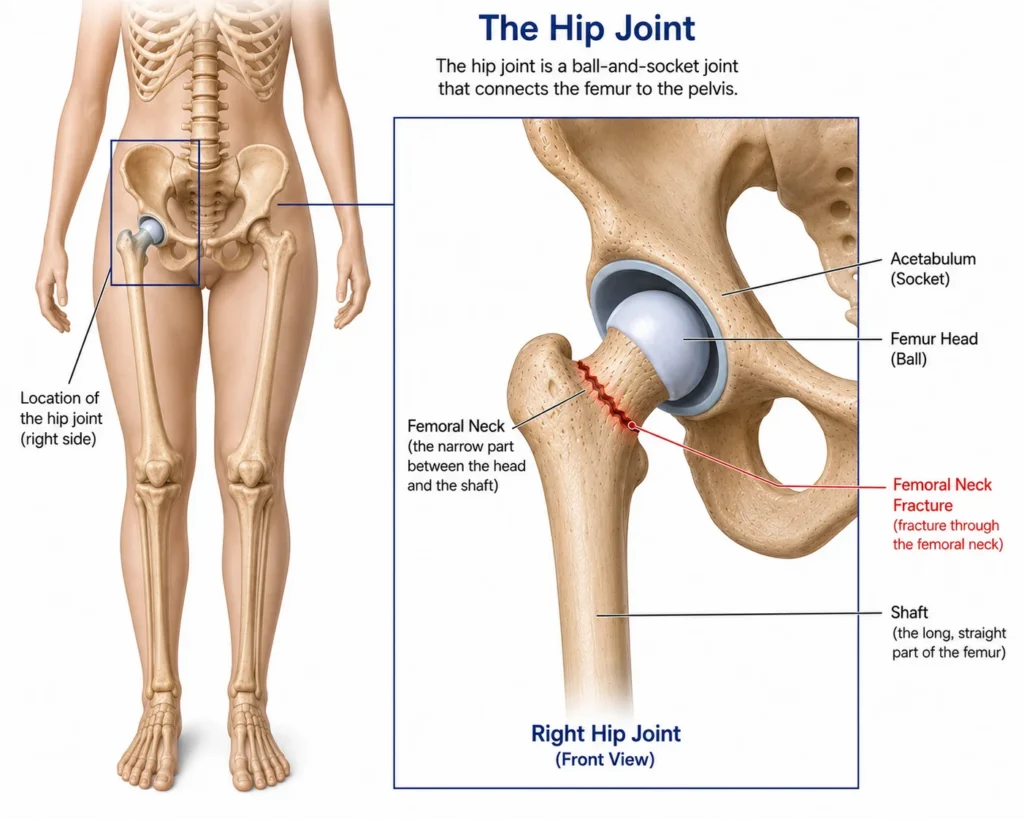
A neck of femur fracture, commonly called a hip fracture, is one of the most common injuries around the hip. It occurs in the narrow part of the thigh bone (femur) that connects the ball of the hip joint to the rest of the leg.
These fractures can occur at any age, but they are most commonly seen in older adults after a simple slip or fall. In younger patients, they are usually caused by high-energy injuries such as road traffic accidents or falls from height.
Why Is a Neck of Femur Fracture Important?
The neck of the femur is more than just a connecting bridge between the hip joint and the leg. It also carries much of the blood supply to the femoral head (the ball of the hip joint).
When the fracture is displaced, this blood supply may be damaged. This can lead to complications such as:
- Non-union (failure of the fracture to heal)
- Avascular necrosis (loss of blood supply to the femoral head)
- Persistent pain and limp
- Reduced hip function
In addition, patients with hip fractures often become bedridden. Prolonged immobilization can cause serious complications such as blood clots, pneumonia, bed sores, urinary infections, muscle weakness, and loss of independence, especially in elderly patients.
For these reasons, neck of femur fractures should be treated as early as possible. And the treatment should be kept under observation of an expert orthopaedic surgeon.
Symptoms
Common symptoms include:
- Pain in the hip or groin
- Difficulty walking or standing
- Inability to bear weight
- Shortening of the affected leg
- Foot turned outward
Most fractures can be diagnosed with X-rays. CT scans and MRI scans may occasionally be required to confirm the diagnosis or detect stress fractures.
Types of Neck of Femur Fractures
Broadly they can be divided into the following
Stress (Hairline) Fractures
These are incomplete fractures that do not completely cross the bone. If detected early, they may be treated with rest and protected weight-bearing.
Undisplaced Fractures
The bone is broken but remains in its normal position.
Displaced Fractures
The fracture fragments have shifted out of position. These fractures carry a higher risk of complications and usually require surgery.
Treatment
Treatment depends on the patient’s age, fracture type, displacement, and overall health.
Children and Teenagers
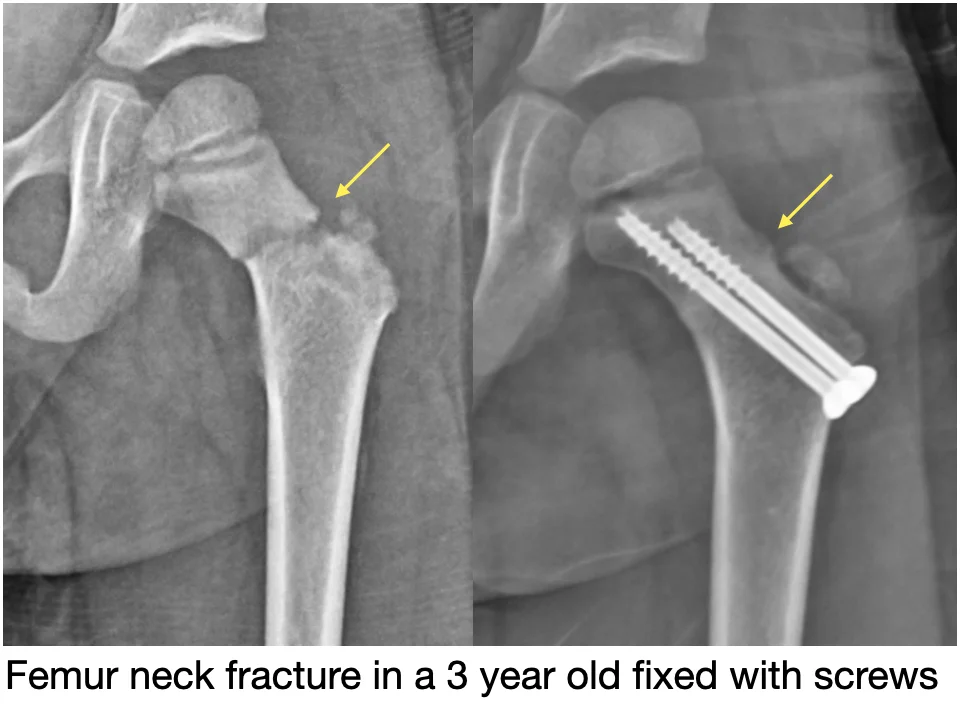
In babies and children younger than four years with certain undisplaced fractures, treatment may be possible with closed reduction and hip spica casting.
Older children and adolescents usually require fixation using K-wires or screws. Some fractures can be treated with closed reduction, while others require open reduction to achieve proper alignment. Such medical situations are categorised under Paediatric Orthopaedics.
Young and Middle-Aged Adults
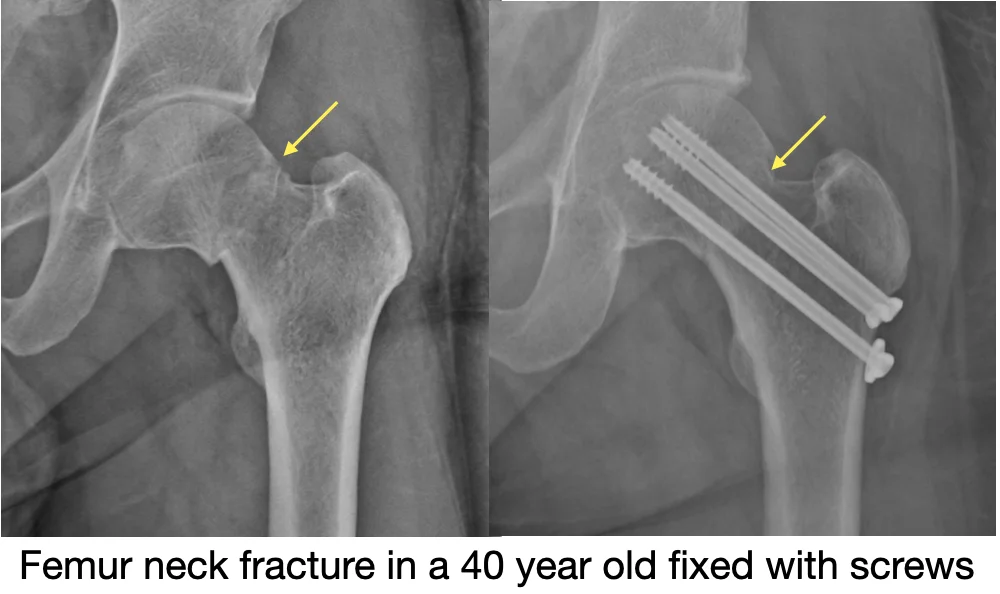
In younger patients, preserving the natural hip joint is the priority.
Undisplaced fractures are commonly treated with cannulated screws or a sliding hip screw.
For displaced fractures, the goal is to achieve accurate reduction of the fracture, either by closed or open reduction, followed by fixation using screws or a sliding hip screw. Early surgery generally provides the best chance of healing and reduces the risk of complications.
Older Adults and Elderly Patients
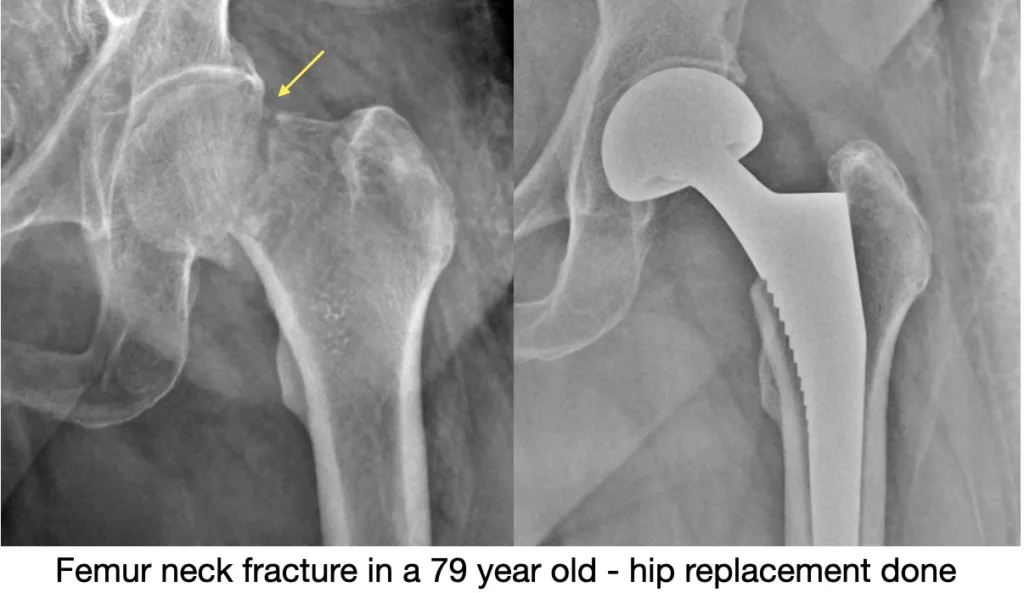
Undisplaced fractures are often treated with screw fixation.
For displaced fractures, hip replacement surgery is commonly recommended because the risk of non-union and avascular necrosis is higher. Depending on the patient’s age and activity level, treatment may involve either a partial hip replacement (hemiarthroplasty) or a total hip replacement.
Take-Home Message
A neck of femur fracture is a serious injury that should never be ignored. Early diagnosis and timely treatment help reduce complications, restore mobility, and improve long-term outcomes. Modern surgical techniques allow most patients to return to their daily activities and regain independence after treatment.
Want to learn more? Read our articles on What to Do After an Injury? and Types of Implants Used in Orthopedic Surgery to better understand fracture care, surgical treatment options, and recovery after orthopedic injuries.
Disclaimer: This article is intended for general educational purposes only and should not be considered medical advice. Every patient is different. Please consult a qualified healthcare professional for diagnosis and treatment recommendations specific to your condition.